

Recent
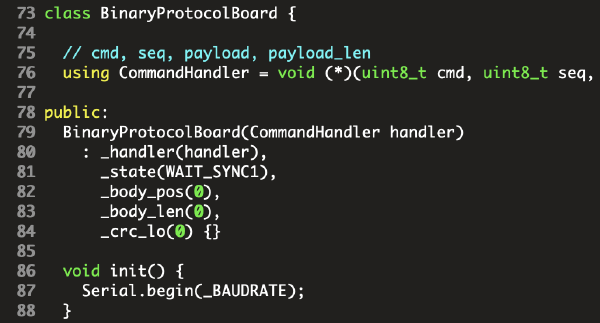
EEPROM Programmer: Migrating from JSON-RPC to Binary Protocol
2022 words·10 mins·
loading
·
loading
The EEPROM Programmer’s serial protocol was migrated from JSON-RPC (with ArduinoJson dependency) to a lightweight binary protocol. On Arduino DUE + AT28C64: reads are 4.4x faster (6.96s to 1.58s), full write cycles are 2.7x faster (33.74s to 12.70s), and flash usage dropped 31% (16KB saved). The protocol uses length-prefixed frames with CRC-16/CCITT integrity checking, a state machine receiver on the firmware side, and blocking serial reads on the Python side. ArduinoJson — the only external firmware dependency — was eliminated entirely.
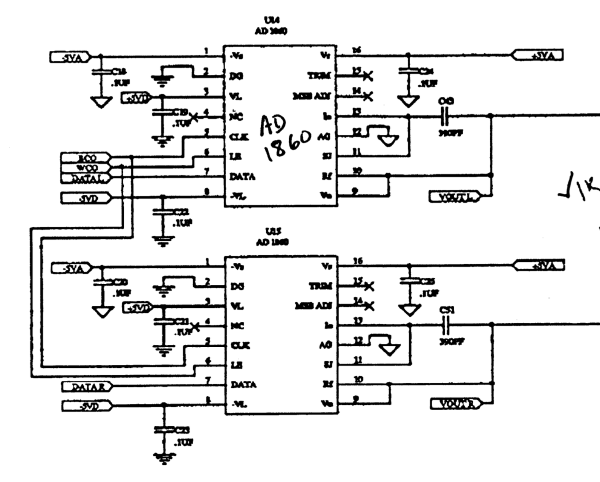
DAC SPI: Wiring of AD1860
703 words·4 mins·
loading
·
loading
The AD1860 DAC IC is correctly wired and produces a valid analog output. A reference schematic from the early 1990s is used to identify non-critical components, and a full-scale sawtooth waveform (±3 V) is generated on one channel using an Arduino. The hardware setup functions as expected; the remaining task is implementing a correct SPI interface capable of handling 18-bit transfers.
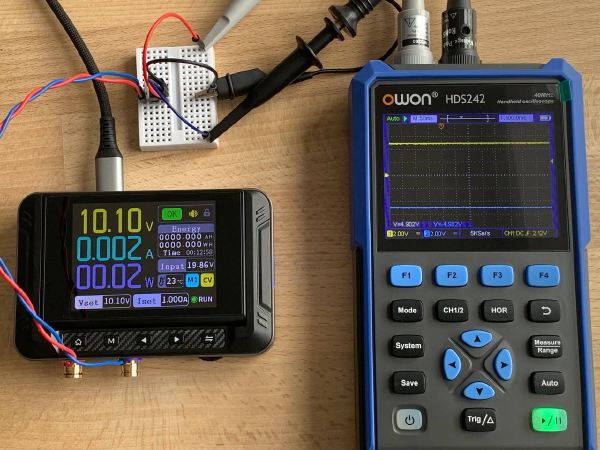
DAC SPI: How to Make a Positive/Negative Power Supply
978 words·5 mins·
loading
·
loading
Several methods for generating ±5 V rails were evaluated, ranging from dual wall warts to regulator-based and buck-boost solutions, with stability, noise, and grounding complexity as the main trade-offs. The most practical approach for the DAC setup proved to be regulator-based supplies, while more complex configurations offered little benefit and higher power consumption.
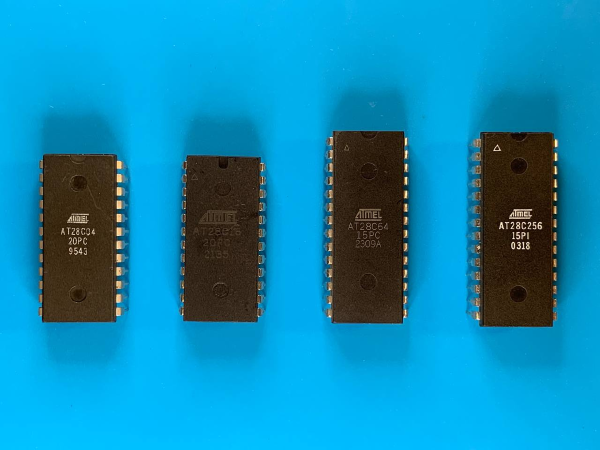
EEPROM Programmer: Supported Chips
1869 words·9 mins·
loading
·
loading
The EEPROM Programmer now supports all available AT28C family chips: AT28C04, AT28C16, AT28C64, and AT28C256. Chip-specific features like RDY/BUSY polling and page-write mode enable major speedups on Arduino DUE but are not viable on MEGA. Performance measurements and wiring details are provided for each chip.
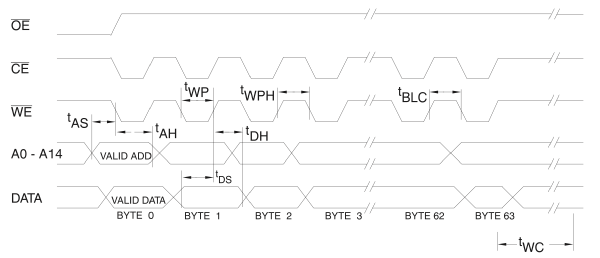
EEPROM Programmer: AT28C256's Page Write Operation
1277 words·6 mins·
loading
·
loading
Page-write support in the AT28C256 can significantly speed up programming, but it depends on tight timing. The Arduino MEGA is too slow to use this feature reliably, while faster platforms like the Arduino DUE make it practical and stable.