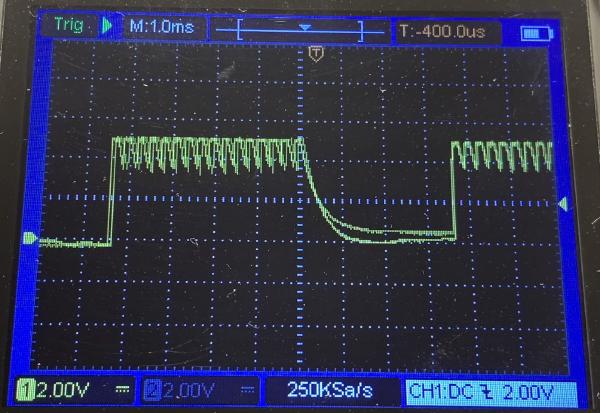
When an Arduino establishes a serial connection, the board resets and produces transient voltage spikes on the EEPROM pins. These fluctuations can reach up to 2 V, enough to toggle the !WE pin and initiate unintended write operations. Tying the !WE pin to VCC during read mode prevents data corruption.
Misconfigured or uninitialized Arduino pins generate unstable voltage levels that vary with frequency and signal state. During board reset, all pins enter a floating state, producing undefined signals that can affect connected devices. This can lead to data corruption or unpredictable behavior in chips such as EEPROMs or DACs.
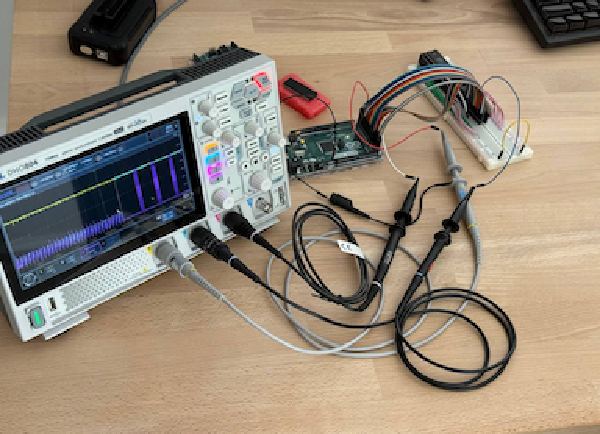
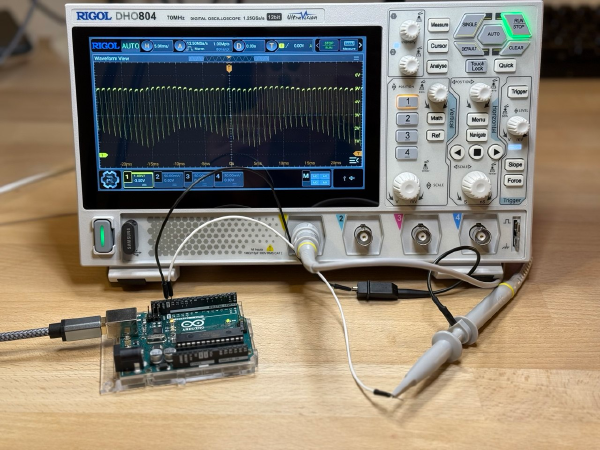
The EEPROM Programmer initially returned corrupted data. I tested wiring, bit ordering, and bus isolation, suspecting noise on the data lines. Oscilloscope traces suggested interference, but the root cause was software, several Arduino address pins were never initialized. These floating pins produced unstable signals that mimicked noise. After proper initialization, the API produced stable results identical to a reference programmer.